Why Stress Wins When Women Wait Too Long to Reset
Stress doesn’t just feel overwhelming—it reshapes your body and mind over time. For women, juggling roles at work, home, and in relationships often means personal well-being comes last. Ignoring chronic stress can quietly affect sleep, digestion, mood, and immunity. But the good news? Small, science-backed shifts in daily routine can restore balance. This is not about drastic fixes, but sustainable, realistic strategies that work with your life—not against it. The key lies not in eliminating stress entirely, but in building a resilient response to it. When recovery is delayed, the body pays a price. Yet, by recognizing early signals and responding with intention, women can regain control and restore harmony from within.
The Hidden Toll of Chronic Stress on Women’s Health
Chronic stress is not merely an emotional burden—it operates as a silent disruptor of physical health, especially in women. Unlike acute stress, which is short-lived and often adaptive, chronic stress persists over weeks, months, or even years, leading to prolonged activation of the body’s stress response systems. The primary hormone involved, cortisol, functions like a biological alarm system. In balanced amounts, it helps regulate energy, alertness, and immune activity. But when cortisol remains elevated due to unrelenting demands, it begins to interfere with essential bodily functions.
Women are particularly vulnerable to the physiological effects of chronic stress due to hormonal complexity. The interplay between cortisol and reproductive hormones such as estrogen and progesterone can become unbalanced, leading to irregular menstrual cycles, increased premenstrual symptoms, or even temporary amenorrhea—the absence of menstruation. This disruption occurs because the body, under perceived threat, prioritizes survival over reproduction. In simpler terms, when the brain believes resources are scarce or danger is present, it signals that now is not the time for fertility, subtly shutting down non-essential systems.
Additionally, prolonged stress contributes to persistent fatigue, even when sleep duration appears adequate. This is because high cortisol levels can impair the quality of deep, restorative sleep, leaving women feeling unrested despite spending sufficient time in bed. Digestive issues such as bloating, constipation, or irritable bowel symptoms are also commonly linked to stress, as the gut and brain communicate closely through the gut-brain axis. When the nervous system remains in a state of alert, digestion slows, and inflammation may increase.
Mood disturbances, including irritability, low motivation, and feelings of detachment, often follow. While not a diagnosis in itself, chronic stress can heighten the risk of developing anxiety or depressive symptoms, especially in individuals already predisposed. Immune function may also decline over time, making the body more susceptible to infections or slower to heal. These changes do not happen overnight, but accumulate silently, like wear and tear on an overused machine. The result is a gradual erosion of vitality that many women mistake for aging or personal failure, when in fact it is a biological response to unmanaged stress.
Why Women Delay Stress Relief: Breaking the ‘Busy as a Badge’ Mindset
One of the most significant barriers to stress recovery is not lack of knowledge, but deeply ingrained cultural norms that equate busyness with worth. For many women, particularly those balancing careers, parenting, and caregiving for aging relatives, rest is often viewed as a luxury rather than a necessity. The idea that being constantly occupied reflects dedication, love, or competence has become so normalized that taking time for oneself can trigger feelings of guilt or selfishness. This mindset—sometimes referred to as the “busy as a badge” phenomenon—positions exhaustion as a sign of productivity, when in reality, it is a warning sign of depletion.
Consider the common scenario of a mother who skips meals to prepare food for her family, stays up late to finish work emails, or cancels a walk with a friend to clean the house. These acts are often framed as acts of love or responsibility, yet they come at a cost. Each time personal needs are deferred, the body absorbs another layer of stress. Over time, this pattern becomes automatic, making self-care seem like an indulgence rather than a biological imperative. The irony is that the very people women strive to care for depend on their well-being. A depleted caregiver cannot sustainably support others.
Societal expectations further reinforce this imbalance. Women are frequently praised for their ability to “do it all,” yet rarely taught how to sustain that effort without burnout. The absence of visible role models who prioritize balance sends a subtle message: rest is for the weak, or for those who have “less to do.” But the truth is that everyone, regardless of responsibility, requires recovery. The body does not distinguish between stress caused by work deadlines and that caused by emotional labor—it responds the same way.
Shifting this mindset begins with redefining strength. True resilience is not measured by how much one can endure, but by the ability to recognize limits and respond with compassion. Choosing to rest, to say no, or to pause is not a sign of failure—it is an act of wisdom. When women begin to view self-care as foundational to their roles rather than secondary to them, they open the door to lasting well-being. The goal is not perfection, but awareness: noticing when the scale tips too far toward output and too far from renewal.
Breath as a Biological Reset: The Science Behind Simple Techniques
Among the most accessible and immediate tools for stress recovery is the breath. Unlike many wellness interventions that require time, equipment, or financial investment, breathing is always available. More importantly, it directly influences the autonomic nervous system—the unconscious regulator of heart rate, digestion, and stress response. When practiced intentionally, certain breathing techniques can shift the body from a state of alert (sympathetic dominance) to one of calm (parasympathetic activation), effectively signaling that danger has passed.
Diaphragmatic breathing, also known as belly breathing, is a foundational practice. It involves slow, deep inhalations that expand the lower abdomen rather than the chest. This type of breathing increases oxygen exchange and stimulates the vagus nerve, a key component of the parasympathetic nervous system. The vagus nerve acts like a biological brake, slowing heart rate and reducing blood pressure. Think of it as sending a quiet message to the brain: “We are safe. We can rest.” Unlike shallow chest breathing, which is common during stress and can amplify feelings of anxiety, diaphragmatic breathing promotes a sense of grounding and presence.
Another effective method is box breathing, a structured technique used by healthcare professionals and first responders to regain composure under pressure. It follows a simple four-part pattern: inhale for four seconds, hold for four, exhale for four, and pause for four before repeating. This rhythm creates a meditative focus that interrupts mental chatter and redirects attention away from stressors. The consistency of the count helps regulate the nervous system by promoting predictability, which the brain interprets as safety.
A 5-minute daily practice can yield noticeable benefits. Begin by sitting comfortably, placing one hand on the chest and the other on the belly. Inhale slowly through the nose, allowing the belly to rise while keeping the chest relatively still. Exhale gently through the mouth or nose, feeling the abdomen fall. Repeat for several cycles, gradually extending the duration as comfort increases. No special training is required—only consistency. Over time, this practice can retrain the body’s stress response, making calm more accessible even during challenging moments. It is not a cure-all, but a daily recalibration that honors the body’s need for balance.
Movement That Matches Your Mood: Finding Gentle Rhythms
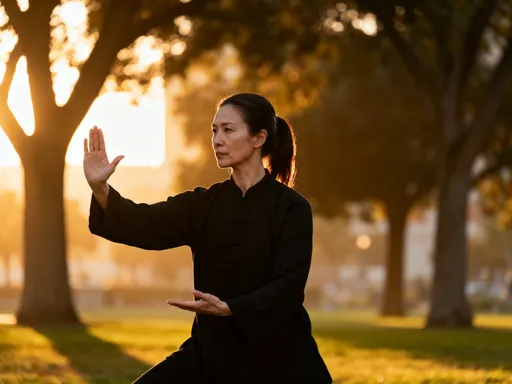
Physical activity is widely recognized for its stress-reducing benefits, yet many women associate exercise with intensity, performance, or appearance goals—factors that can add pressure rather than relieve it. The key to sustainable movement lies not in pushing the body, but in listening to it. Gentle, rhythmic forms of motion—such as walking in nature, stretching, or restorative yoga—can be profoundly effective in metabolizing stress hormones like cortisol and adrenaline without triggering additional strain.
Walking, especially in green spaces, offers a dual benefit: physical activity and environmental calming. Nature has a unique ability to reduce mental fatigue and restore attention. The rhythmic motion of walking—left, right, left, right—creates a meditative effect, allowing the mind to unwind. Unlike structured workouts that may feel like another item on a to-do list, a walk can be unhurried, without a destination or time goal. Even 10 to 15 minutes can shift mood and clarity, particularly when practiced consistently.
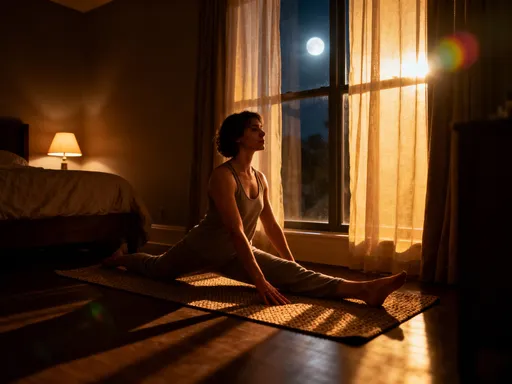
Stretching and yoga, especially gentle or restorative styles, support the release of muscular tension that accumulates during stress. When the body is under pressure, it often holds tightness in the shoulders, neck, and jaw. Slow, mindful stretching signals safety to the nervous system, encouraging relaxation. Restorative yoga, which uses props like bolsters and blankets to support the body in passive poses, is particularly effective for women experiencing fatigue or burnout. It prioritizes rest over exertion, making it ideal for days when energy is low.
The principle of matching movement to mood is essential. On high-energy days, a brisk walk or light strength training may feel invigorating. On low-energy days, a few minutes of seated stretches or deep breathing while lying down may be more appropriate. The goal is not to achieve a certain number of steps or calories burned, but to move in ways that feel supportive rather than demanding. When exercise is framed as self-care rather than obligation, it becomes a sustainable part of stress recovery. Over time, this approach fosters a healthier relationship with the body—one based on respect, not punishment.
Rewriting Your Daily Script: Micro-Habits That Build Resilience
Major lifestyle changes are often unsustainable, especially for women already managing multiple responsibilities. Lasting resilience is built not through dramatic overhauls, but through small, consistent actions—micro-habits that gradually reshape daily experience. These practices are not about adding more to the day, but about inserting moments of intention that counteract the autopilot mode stress encourages.
One powerful micro-habit is setting a digital curfew—an agreed-upon time each evening to turn off screens. The blue light emitted by phones, tablets, and computers can interfere with melatonin production, the hormone responsible for sleep onset. Beyond the biological impact, late-night scrolling often exposes the mind to stressful content or unfinished tasks, making it harder to unwind. By disconnecting 60 to 90 minutes before bed, women create space for relaxation, whether through reading, light conversation, or quiet reflection. This simple boundary supports both sleep quality and mental clarity.
Another effective practice is scheduling “do-nothing” minutes—short intervals dedicated to stillness without purpose. This might mean sitting with a cup of tea and watching the sky, closing the eyes and breathing, or simply pausing between tasks. In a culture that values constant productivity, doing nothing can feel uncomfortable at first. Yet, these moments allow the nervous system to reset and the mind to integrate experiences. They are not wasted time, but essential maintenance.
Keeping a gratitude journal, even for a few sentences each day, can also shift cognitive patterns over time. Stress often narrows attention to what is wrong or lacking. Gratitude practice gently redirects focus toward what is present and sufficient. It does not deny hardship, but balances perspective. Writing down three small things—such as a warm cup of coffee, a kind word, or a moment of laughter—can rewire neural pathways associated with appreciation and contentment. Like a muscle, this capacity strengthens with repetition.
Each of these micro-habits functions as a form of self-trust. They communicate to the body and mind: “You matter. Your well-being is a priority.” When practiced consistently, they accumulate into a new daily rhythm—one that supports resilience rather than depleting it.
The Power of Predictability: How Routine Soothes the Stressed Brain
The human brain thrives on predictability, especially when under stress. Uncertainty and constant decision-making deplete mental energy, a phenomenon known as decision fatigue. When every meal, task, or transition requires deliberation, the brain remains in a state of low-grade alertness, making it harder to relax. Structured daily rhythms—consistent sleep and wake times, regular meal schedules, and planned transitions between activities—provide psychological safety by reducing the need for constant choices.
Think of the brain like a child who feels calmer with a predictable schedule. Knowing what comes next reduces anxiety and frees up cognitive resources for more meaningful engagement. For women juggling multiple roles, a gentle routine does not imply rigidity, but rather a framework that supports stability. Waking and sleeping at roughly the same time each day, even on weekends, helps regulate the body’s internal clock, or circadian rhythm, which influences hormone release, metabolism, and mood.
Similarly, eating meals at consistent intervals prevents blood sugar fluctuations that can mimic or worsen stress symptoms—such as irritability, fatigue, or brain fog. A simple routine might include breakfast within an hour of waking, a midday meal, and an evening meal that allows for digestion before bedtime. Snacks, if needed, can be planned rather than reactive, reducing the tendency to reach for quick, sugary options under stress.
Transitions between activities also benefit from intention. Instead of rushing from one task to the next, a brief pause—such as three deep breaths or a short walk—can signal a mental reset. These small rituals create boundaries that prevent work from spilling into personal time, or parenting duties from overtaking self-care. A sample rhythm might look like: wake, hydrate, breathe, move gently, eat, work in focused blocks, pause, reconnect, wind down, sleep. The exact structure is less important than the presence of anchors that provide stability. Over time, this predictability becomes a form of self-compassion, offering the brain the safety it needs to recover.
Knowing When to Seek Support: From Self-Care to Professional Guidance
Self-care practices are powerful, but they are not a substitute for professional support when stress becomes unmanageable. There is strength in recognizing when personal efforts are not enough. Persistent anxiety—characterized by constant worry, restlessness, or physical tension that does not ease with rest—may indicate the need for evaluation by a healthcare provider. Emotional numbness, a sense of detachment, or feeling “frozen” despite efforts to relax are also signs that the nervous system may be overwhelmed.
Burnout, a state of emotional, physical, and mental exhaustion caused by prolonged stress, often develops gradually. It is marked by reduced performance, cynicism, and a sense of inefficacy. Women in caregiving or high-pressure roles are especially susceptible. Unlike ordinary tiredness, burnout does not resolve with a single day off. It requires intentional recovery and, in some cases, structured support.
Seeking help is not a failure, but a courageous step toward healing. Options may include speaking with a primary care provider to rule out underlying medical conditions, consulting a licensed therapist or counselor for emotional support, or participating in stress management programs. These resources offer tools tailored to individual needs and are grounded in evidence-based approaches. The goal is not to “fix” oneself quickly, but to build sustainable strategies with professional guidance.
It is also important to recognize that healing is not linear. Some days will feel easier than others, and progress may be slow. What matters is the commitment to well-being as an ongoing practice, not a destination. By combining self-care with timely support, women can restore balance and reclaim a sense of agency over their lives.
True well-being isn’t about eliminating stress—it’s about building the capacity to recover. For women, reclaiming calm starts with small, intentional choices that honor their unique needs. By integrating gentle, evidence-based practices into daily life, lasting resilience becomes possible. The goal isn’t perfection, but progress—one breath, one moment, one day at a time.